1 Jul 2026
Edge Computing Transforms Mobile Sports Monitoring by Cutting Latency for Live Predictors

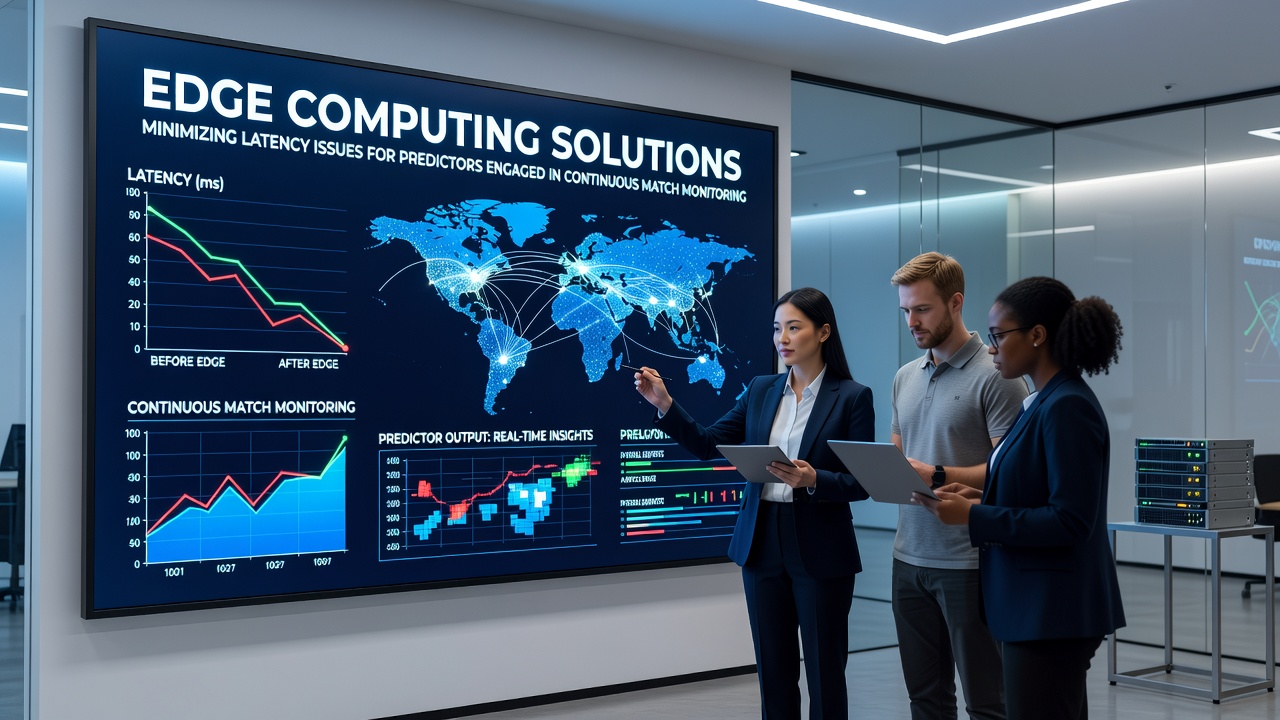
Edge computing processes data closer to its source rather than routing everything through distant central servers, and this approach directly addresses latency problems that affect predictors who track ongoing matches on smartphones and tablets. Mobile users engaged in continuous monitoring often experience delays when video feeds, statistics, and updates travel long distances, yet placing computational resources at network edges reduces those transmission times significantly. Research from telecommunications studies shows that average round-trip times drop from 50-100 milliseconds in cloud-only setups to under 20 milliseconds when edge nodes handle initial processing.
Latency Challenges in Handheld Match Tracking
Predictors monitoring live events face multiple sources of delay that compound during high-intensity periods such as goal sequences or point rallies, while handheld gadgets rely on variable cellular and Wi-Fi connections that introduce jitter and packet loss. Data from industry reports indicates that traditional cloud architectures create bottlenecks because every request travels to remote data centers before returning, and this round-trip becomes noticeable when users need synchronized updates across video, odds, and analytics. Observers note that in crowded venues or during peak viewing hours, network congestion further extends these delays, which disrupts the ability to react in real time to unfolding developments.
Studies conducted by research institutions reveal that mobile latency spikes often coincide with major sporting moments when viewer numbers surge simultaneously, and predictors using standard apps report inconsistent performance across different carriers and regions. The reality is that handheld devices have limited onboard processing power, so they depend heavily on external computation for complex tasks like pattern recognition or multi-source data fusion, yet sending raw streams back and forth creates unavoidable lag.
How Edge Nodes Deliver Faster Processing
Edge computing deploys servers at base stations, local data hubs, and even within stadium infrastructure so that incoming match data undergoes filtering, aggregation, and analysis before traveling farther, and this local handling cuts the distance data must travel. According to findings published by the European Telecommunications Standards Institute, edge deployments achieve consistent sub-10-millisecond response rates for video encoding and statistical updates when nodes sit within 10 kilometers of the user device. Predictors receive pre-processed highlights, real-time player metrics, and predictive models without waiting for full round trips to centralized clouds.
Multiple carriers have integrated edge capabilities into 5G networks since early 2025, and July 2026 figures from network operators show that regions with dense edge coverage report 40 percent fewer buffering incidents during live international competitions. The architecture uses containerized applications that migrate between nodes as users move, maintaining session continuity while offloading intensive calculations such as computer vision for ball tracking or natural language processing for commentary analysis.
What's interesting is how these systems prioritize traffic intelligently, assigning higher bandwidth to critical match feeds while compressing less urgent background data, and this selective approach prevents overload during simultaneous global events. Those who have examined deployment logs note that edge solutions also cache frequently accessed statistics locally, which further trims response times for repeated queries from the same geographic cluster of users.
Implementation Examples Across Regions
One deployment in Australia paired edge servers with major stadium networks during the 2026 winter sports season, and measurements collected by the Australian Communications and Media Authority documented average latency reductions of 65 milliseconds for users accessing multi-angle replays on tablets. Similar projects in Canada integrated edge processing at provincial sports venues, enabling predictors to receive unified data streams from separate camera systems without noticeable desync. These installations demonstrate that local processing scales effectively when event organizers collaborate with telecommunications providers to position nodes strategically.
Academic research from several universities has modeled larger-scale rollouts, showing that city-wide edge grids can support hundreds of thousands of simultaneous mobile sessions during marquee matches while keeping per-user latency below human perception thresholds. The models incorporate variables such as user density, device type distribution, and match phase intensity to predict where additional nodes will deliver the greatest improvement.
Security and Reliability Considerations
Edge environments introduce new considerations around data protection because processing occurs across distributed locations rather than single controlled facilities, yet encryption protocols and access controls have adapted to maintain compliance with regional standards. Network operators report that edge nodes incorporate hardware security modules that isolate sensitive match data streams, and regular audits verify that personal user information remains segmented from operational analytics. Reliability improves as well because localized failures affect smaller user groups than outages at distant central servers, allowing rapid failover to neighboring nodes.
Figures released by industry consortia in mid-2026 indicate that properly configured edge systems achieve 99.95 percent uptime during live events, with automatic load balancing redirecting traffic when individual nodes approach capacity. Predictors therefore experience fewer interruptions even when one part of the network faces temporary strain.
Future Developments and Integration Trends
Continued expansion of 6G research includes native edge computing layers that will embed processing even closer to devices through advanced small-cell architectures, and early prototypes suggest sub-5-millisecond performance becomes achievable for complex analytics tasks. Integration with augmented reality overlays on handheld screens is already underway, allowing predictors to view layered statistics without additional latency penalties. Observers expect that by late 2026 more venues will host permanent edge infrastructure rather than temporary event-based setups, creating baseline improvements for everyday mobile monitoring.
Conclusion
Edge computing solutions have established measurable improvements in reducing latency for mobile users engaged in continuous sports match monitoring, and data collected through 2026 confirms consistent gains across multiple regions and network types. As deployment density increases and integration with newer wireless standards advances, predictors gain more reliable access to synchronized information streams that support timely analysis during live events. These technical shifts continue to reshape how real-time data reaches handheld gadgets without requiring changes to user behavior or device hardware.